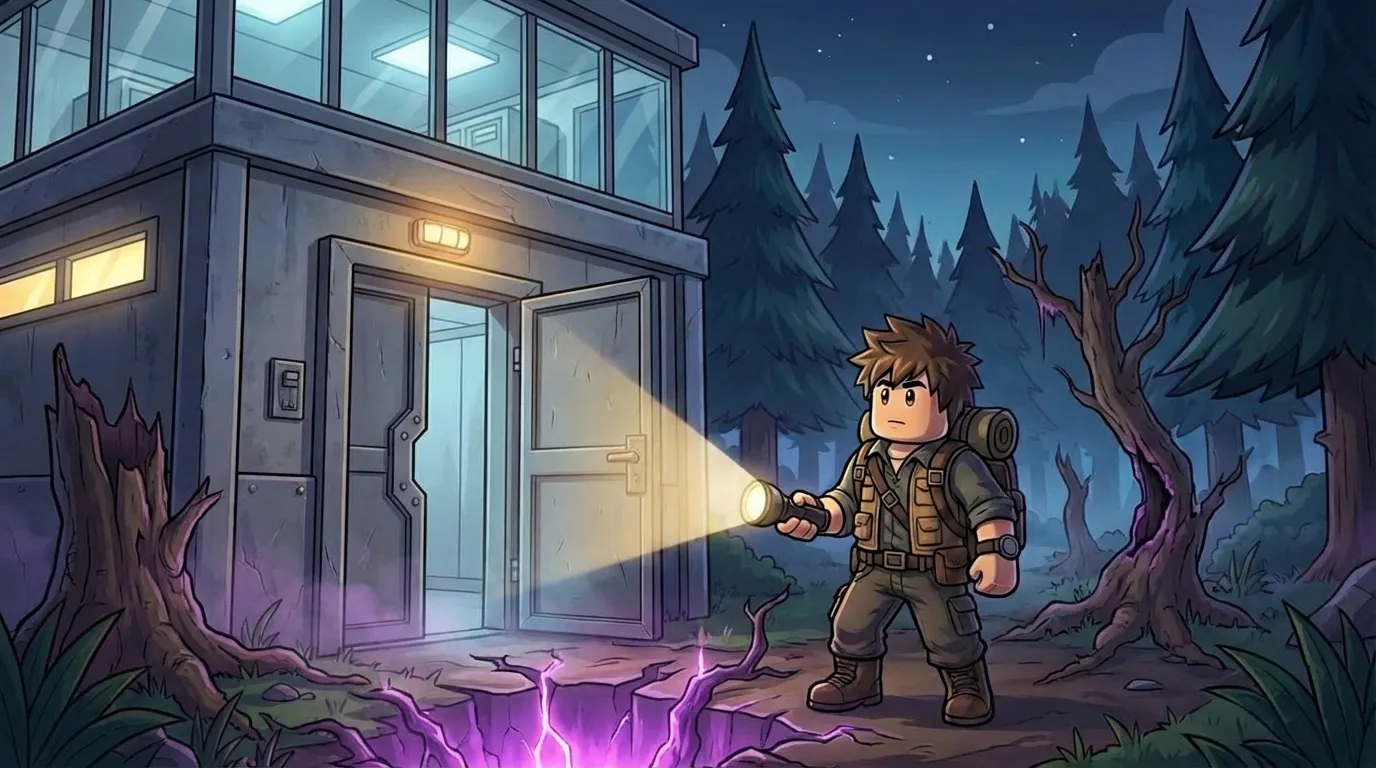
99 Nights In the Forest just dropped its biggest challenge yet with the Forest is Angry update, and survival just got a whole lot harder. The forest has had enough of players exploiting its resources, and now it’s fighting back with corruption, rifts, and a brand new hard mode that fundamentally changes how you play.
If you’ve been cruising through normal mode, hard mode will humble you fast. This isn’t just a difficulty increase—it’s a completely new mechanic that requires constant attention, map awareness, and aggressive corruption management. Here’s everything you need to know about the update and how to survive it.
What’s New in the Forest is Angry Update
The update introduces three major systems that completely change the endgame experience:
Hard Mode is an optional difficulty toggle that permanently alters your run once activated. There’s no going back after you pull the lever, so make sure you’re prepared before committing.
Corruption System spreads across the map through rifts, creating infected zones that debuff your entire camp if left unchecked. Let corruption hit certain thresholds, and the game becomes nearly impossible.
Research Outpost serves as the new hub for hard mode activities. This building contains the hard mode lever, corruption monitoring systems, and loot chests with supplies you’ll desperately need.
The update also adds a ping system (press Q on PC) to help coordinate with teammates, which is crucial when managing multiple corruption zones simultaneously.
Understanding the Corruption System
Corruption is the core mechanic of hard mode. Here’s how it works and why it’ll ruin your run if you ignore it.
Rifts spawn randomly across the map, creating purple-infected zones filled with corrupted trees, wolves, and other hostile entities. Each active rift increases your overall corruption percentage, which you can monitor at the research outpost.
When corruption reaches certain thresholds, your camp suffers devastating debuffs:
- At 50% corruption: Food Rot Spores activate - Almost all food corrupts after 90 seconds, whether in farms, sacks, stew on hotbar, or inventory
- At 75% corruption: Passive healing disabled - No natural health regeneration, bandages and MRE kits become mandatory
- Higher corruption: The deer becomes permanently aggressive (not just at night)
- High corruption: Cultist waves become more frequent and dangerous
At 100% corruption, the game is essentially unplayable. You’ll be fighting constant threats with no healing, rotting food, and an enraged deer hunting you 24/7. The Food Rot Spores debuff is particularly brutal—you’ll need to cook and eat food quickly before it spoils.
The only way to reduce corruption is by actively fighting it back at rifts. This means chopping down infected trees, killing corrupted wolves, and clearing the area around each rift until it stabilizes.
Finding and Accessing Hard Mode
Before you can even attempt hard mode, you need to locate the research outpost. After expanding your campfire once or twice, the Research Outpost will appear nearby—it’s a large new building you haven’t seen before.
Inside the research outpost, you’ll find several notes explaining the lore behind the corruption and what’s happening to the forest. Read these carefully—they contain hints about managing rifts and the infection spread.
Critical timing: You must activate hard mode before the third night. Head down to the basement where you’ll see a lever on the wall. If playing solo, you’ll see one lever with your name above it. Pulling it votes to trigger hard mode. Once nighttime arrives, a cutscene shows your character pulling the lever with a big red warning screen.
Important: Hard mode is permanent once activated. There’s no reverting back to normal difficulty, so make sure you’re fully prepared before committing.
Preparing for Hard Mode: What You Actually Need
Here’s the honest checklist before pulling that lever:
Armor is mandatory. Iron armor at minimum. You’ll be fighting corrupted wolves constantly, and without protection, you’ll burn through medical supplies faster than you can loot them.
Stockpile weapons and ammo. Rifles are essential—corrupted wolves die to one rifle headshot, while alpha wolves need one rifle headshot plus one revolver headshot. Rushing to Crafting Bench 4 for the Ammo Crate is a solid early strategy.
Get a full stack of food. The corruption triggers Food Rot Spores at 50%, so have a Crock Pot ready. Don’t enter hard mode hungry, and plan to cook and eat quickly once the rot starts.
Max your campfire level. You need the fuel capacity and bonuses from a high-level campfire to sustain yourself during long corruption-clearing runs.
Strong Axe or Chainsaw required. Large corrupted trees need better tools to chop down efficiently. Corrupted wood still works for fuel and can be used in Biofuel Processors.
Craft a Research Monitor. After activating hard mode, return to the Research Outpost and open the three locked crates (previously red-lit). The main floor crate contains a blueprint for the Research Monitor—place this at your campfire to track corruption percentage and active debuffs.
The upstairs crates contain MRE kits and bandages. Loot everything—you’ll need every healing item once passive healing shuts down at 75% corruption.
How to Fight Corruption and Clear Rifts
Once hard mode is active, rifts will start appearing across the map. Your main objective is finding and clearing these before corruption spirals out of control.
Rifts are marked by purple infected zones. You’ll see corrupted trees (identifiable by their dark, twisted appearance) and corrupted wolves with a distinct visual effect. The entire area around a rift has an ominous purple glow.
To clear a rift, you need to eliminate all corruption in the immediate area:
Chop down every infected tree. Use your best axe—the notes mention an “ultra powerful axe” that makes this easier, though finding it requires exploration. Regular axes work but take longer.
Kill all corrupted wolves. They’re tougher than normal wolves and deal more damage. Keep your distance, use ranged weapons when possible, and don’t get surrounded.
Clear the perimeter. Even after the main threats are gone, make sure no infected elements remain. One corrupted tree left standing can keep the rift active.
Once a rift is fully cleared, it becomes “contained” and stops contributing to your corruption percentage. Head back to the research outpost to check the corruption monitor and confirm the percentage dropped.
Managing Multiple Active Rifts
Here’s where hard mode gets genuinely difficult: rifts don’t spawn one at a time.
The corruption monitor at the research outpost shows how many active rifts currently exist. You might clear one rift only to discover two more have spawned on opposite sides of the map.
Prioritize rifts by proximity and corruption level. If corruption is approaching a dangerous threshold (50%+), handle the closest rift immediately. If you’re sitting comfortable at 15%, you can strategically plan your route to clear multiple rifts efficiently.
Use the ping system to coordinate with teammates. If you’re playing in a group, split up to cover more ground. One person can handle north-side rifts while another clears south. Communication is critical.
Don’t overextend. Traveling to a distant rift while three closer ones spawn behind you is how you lose control. Clear what’s nearby first, then expand outward.
The corruption percentage updates in real-time at the research outpost. Make checking it part of your routine—clear a rift, return to base, check the monitor, plan your next move.
Hard Mode Rewards: What You Actually Get
Unlike what you might expect, hard mode actually comes with tangible rewards:
Diamond Rewards:
- Reach day 50 in hard mode: Earn bonus diamonds
- Survive to day 99 in hard mode: Earn additional diamonds
Exclusive Badge: Complete 99 nights in hard mode to unlock the ”☣†Ψ§∞☠‡Ω@” badge. This mysterious badge is one of the rarest achievements in the game and perfect for badge collectors.
While the diamond rewards aren’t massive, they’re a nice bonus on top of the normal progression. The real draw is the exclusive badge and bragging rights that come with conquering the hardest difficulty.
Is it worth it? If you’re a completionist, badge hunter, or someone who’s already mastered normal mode, absolutely. The rewards justify the extra challenge, especially if you’re playing with a coordinated team. However, if you’re new to the game or prefer casual gameplay, stick with normal mode first.
Hard Mode Survival Tips
If you’re committed to the challenge, here are strategies that make hard mode more manageable:
Set up a forward base near the research outpost. This minimizes travel time when checking corruption levels and grabbing supplies. A bed and some storage here can save you hours of running back to your main camp.
Carry healing items at all times. Passive healing disables at 75% corruption, so you need bandages and MRE kits constantly. Never leave base without at least two healing items once you’re past 70%.
Fight corruption aggressively early. Don’t let it build past 50% if possible—that’s when Food Rot Spores activate and your entire food management collapses. The debuffs at higher percentages compound quickly, and recovering from 70%+ corruption while dealing with no healing and food rot is nearly impossible solo.
Use the notes scattered around the map. They contain hints about corruption mechanics and potential tools (like the ultra powerful axe) that make clearing easier. Explore thoroughly before diving into hard mode.
Know when to reset. If corruption hits 80%+ and you’re low on supplies, sometimes it’s better to start a fresh run with better preparation than to struggle through an unwinnable scenario.
Ping System and Team Coordination
The update added a ping system (press Q on PC) specifically to help players coordinate during hard mode.
Use pings to mark rifts for teammates. When you spot a corruption zone, ping it so your team knows where to go. This is faster than typing in chat and works even if you’re in the middle of combat.
Ping supply caches and dangerous areas. Found a chest with medical supplies? Ping it. See a bear near a rift? Ping it so teammates don’t get ambushed.
Establish a ping language with your team. Multiple quick pings = urgent threat. Single ping = information. This kind of coordination makes hard mode exponentially easier in groups.
Solo players won’t get as much use from the ping system, but it’s still helpful for marking locations on your map for later reference.
Should You Try Hard Mode?
Hard mode is for experienced players who’ve already mastered the base game and want a new challenge. If you’re still learning the basics, struggling to rescue kids, or haven’t hit day 100 yet, stick with normal mode.
Play hard mode if:
- You’ve completed at least one full run to day 100
- You enjoy high-difficulty survival games
- You have a dedicated group to play with
- You want a more intense, management-focused experience
Skip hard mode if:
- You’re new to 99 Nights In the Forest
- You prefer exploration and progression over constant crisis management
- You’re playing solo (it’s possible but significantly harder)
- You want meaningful rewards for the extra difficulty
The Forest is Angry update adds a solid challenge for veteran players, but it’s not essential content. Normal mode is still the best way to experience 99 Nights if you’re playing for the first time or just want to enjoy the core survival loop without the added stress.
Final Thoughts on the Update
The Forest is Angry update delivers exactly what veteran players needed: a genuinely challenging endgame experience with meaningful rewards. The corruption system is well-designed, requiring active map awareness and constant decision-making. The diamond rewards and exclusive badge give you actual incentives beyond just bragging rights.
The 50% and 75% corruption thresholds create natural difficulty spikes that force you to stay on top of rift management. Once Food Rot Spores activate, the game becomes a completely different beast—one mistake and your entire food supply vanishes in 90 seconds.
The ping system is a great quality-of-life addition regardless of difficulty mode, and the research outpost adds interesting lore to the game’s world. The fact that you must activate hard mode before night 3 adds urgency to early-game preparation.
If you’re a completionist badge hunter or someone who’s mastered normal mode, hard mode is absolutely worth attempting. The rewards justify the challenge, especially the exclusive badge. Just make sure you’re prepared before pulling that lever—because once the forest gets angry, it doesn’t calm down.